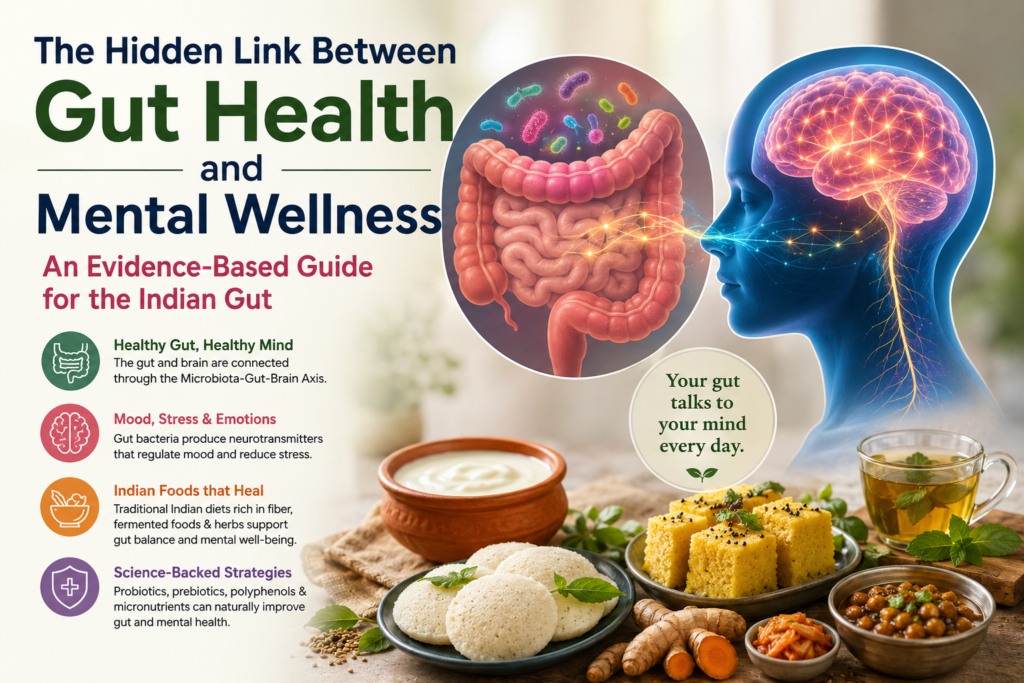
How Gut Health Affects Mental Health in India
The term “gut feeling” is no longer just a metaphor. Recent medical research has uncovered a powerful bidirectional communication network called the Microbiota-Gut-Brain (MGB) Axis, proving that gut health directly impacts mental wellness, mood, stress, anxiety, and depression.
For the Indian population—where traditional eating habits are rapidly changing due to urban lifestyles and processed foods—understanding the gut-brain connection is becoming increasingly important for maintaining both digestive and mental health.
Understanding the Gut-Brain Axis: The “Second Brain”
The human digestive system contains the enteric nervous system, often referred to as the “second brain.” It consists of millions of neurons that not only regulate digestion but also communicate constantly with the brain.
1. Neural Pathway: The Vagus Nerve Connection
The vagus nerve acts as a communication superhighway between the gut and the brain. It carries signals that influence:
- Mood regulation
- Stress response
- Emotional balance
- Cognitive function
Studies suggest that disruptions in gut health may directly affect mental health disorders such as anxiety and depression.
2. Gut Bacteria and Neurotransmitters
Gut microbes produce more than 90% of the body’s serotonin, commonly known as the “happy hormone.” They also help generate important neurotransmitters such as:
- Dopamine
- GABA
- Serotonin
These chemicals play a crucial role in emotional stability, sleep, stress management, and overall mental wellness.
3. Inflammation, Dysbiosis, and Mental Health
An unhealthy gut microbiome, also known as dysbiosis, can trigger chronic inflammation throughout the body. Research now links inflammation to:
- Clinical depression
- Anxiety disorders
- Mood instability
- Brain fog
The Indian Diet and Gut Health: Tradition vs Modern Lifestyle
India’s traditional food culture naturally supports gut microbiome diversity and digestive wellness. However, modern dietary habits are creating new health challenges.
Benefits of Traditional Indian Foods for Gut Health
Ancient Indian dietary practices have long emphasized “Ahar” (diet) as the foundation of physical and mental balance. Modern science now validates many of these traditional approaches.
Fermented Indian Foods and Mental Wellness
Traditional Indian foods such as:
- Dahi (curd)
- Idli
- Dhokla
- Fermented rice preparations
contain natural probiotics including Lactobacillus and Bifidobacterium. These beneficial bacteria may help improve mood, reduce stress, and support mental resilience.
Plant-Based Fiber and Gut Microbiome Diversity
A traditional Indian vegetarian diet rich in:
- Whole grains
- Lentils
- Pulses
- Seasonal vegetables
supports microbial diversity in the gut. A healthy microbiome helps reduce inflammation linked to depression and anxiety.
Traditional Herbal Brews as Natural Prebiotics
Indian herbal decoctions and infusions may act as natural prebiotics by:
- Supporting healthy gut bacteria
- Strengthening the intestinal barrier
- Improving gut pH balance
- Protecting against stress-related gut damage
The Impact of Processed Foods on Mental Health
Urban lifestyles and increasing consumption of ultra-processed foods are negatively affecting gut health across India.
Diets high in:
- Refined carbohydrates
- Fried foods
- Processed snacks
- Sugary beverages
are associated with reduced microbial diversity and a higher risk of anxiety and depressive symptoms.
Evidence-Based Gut Health Strategies for Better Mental Wellness
Psychobiotics for Stress and Anxiety
Specific probiotic strains such as L. rhamnosus and B. longum may help improve sleep quality, reduce stress, and support emotional resilience.
Fiber-Rich Prebiotics for Brain Health
Foods like garlic, onions, legumes, oats, and bananas help produce Short-Chain Fatty Acids (SCFAs), which support brain health and reduce inflammation.
Polyphenols and Indian Spices
Green tea, turmeric, and several Indian spices contain polyphenols that may help reduce depressive symptoms through gut microbiota modulation.
Micronutrients for the Gut-Brain Axis
Adequate levels of Zinc, Magnesium, and Vitamin B12 are essential for neurotransmitter balance, mental wellness, and healthy gut-brain communication.
Gut Health and Anxiety: What Research Suggests
Emerging evidence shows that improving gut health may positively influence:
- Anxiety management
- Mood stability
- Stress tolerance
- Sleep quality
- Cognitive performance
As research continues, personalized nutrition and microbiome-based therapies may become an important part of future mental health treatment strategies.
Conclusion: Why Gut Health Matters for Mental Wellness
Maintaining mental wellness in 2026 requires looking beyond the brain and understanding the role of gut health.
Returning to a diet rich in:
- Traditional Indian fermented foods
- High-fiber meals
- Plant-based nutrition
- Natural prebiotics
while reducing ultra-processed foods may help support a healthier microbiome and better emotional balance.
If you are experiencing persistent anxiety, low mood, digestive symptoms, or stress-related gut issues, a comprehensive medical evaluation focusing on both gut and mental health may help identify underlying causes and improve long-term well-being.